
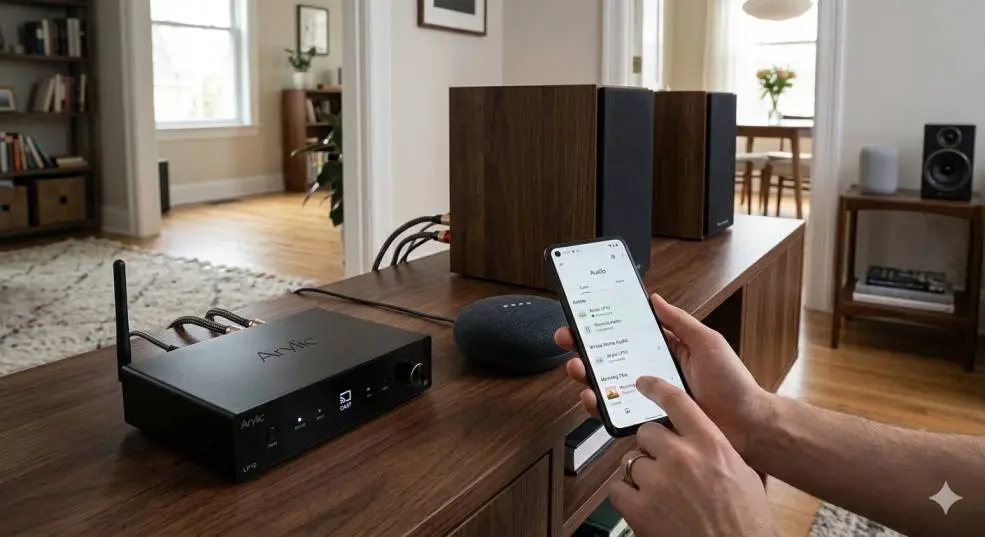
Got an old amplifier or classic speakers collecting dust? You might be curious if they can work with today’s Wi-Fi multi-room audio. The Arylic LP10 Google Cast setup guide is a topic I’ve been digging into personally.
I wanted to see if this small, affordable box could truly give "dumb" audio gear wireless freedom without the usual hassles. After setting it up, testing the sync, and comparing it to other options. I’ve got a clear picture of where the LP10 shines and where it stumbles.
This isn’t marketing hype. It’s about what happens when you unbox the product. You’ll see how to set up whole-home audio.
How to Sync Arylic LP10 Google Cast Setup Guide?
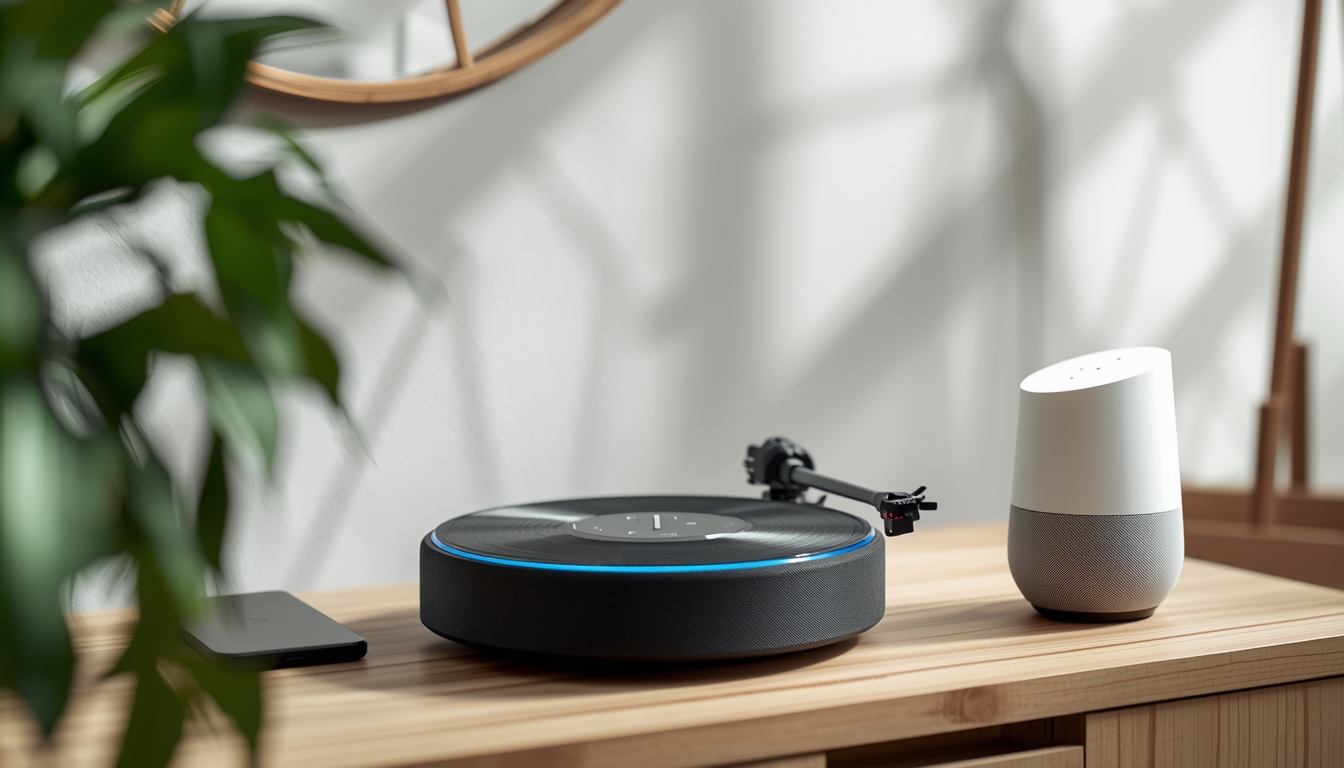
Taking the Arylic LP10 out of the box, the to begin with thing that hits you is the estimate. It's truly tiny—smaller than a smartphone. It's moreover light, so the all-plastic construct feels a bit delicate. It doesn’t shout extravagance, but it doesn’t require to. Its work is to be invisible.
Read Also: Google Gemini in Chrome Now Rolling Out for Chromebooks
Plug it in utilizing the included USB-C control adapter. Then, interface it to your stereo with the given 3.5mm aux or RCA cables. Like that, your vintage equip is prepared for the 21st century. The bundle comes with a shockingly useful IR remote. That's a decent reward at this price.
The Crucial First Step: Enabling Google Cast
Before you can indeed think around multi-room audio, you need to get the LP10 talking to your organize and the Google Home app. Here is the step-by-step reality of how I got it working, counting a hiccup that taught me a parcel.
Step 1: The Go Control App Isn't Just for Show
Forget trying to add it directly to Google Home first. You must start with the Arylic Go Control app (iOS/Android). After powering up the LP10, the app connects via Bluetooth to initially configure the device.
Step 2: The Wi-Fi Hurdle
This is where I hit a snag. The app initially struggled to scan and find my 5GHz Wi-Fi network. It kept spinning. If this happens to you, don't panic. I discovered (thanks to some forum digging) that the LP10 has a hidden web interface.
If you interface the LP10 to your switch by means of the Ethernet port on the back, you can discover its IP address in your switch settings. Type that IP into a browser, and a menu pops up permitting you to check for Wi-Fi networks manually. It worked immediately.
Step 3: Authorize Google Cast
Once the LP10 is on your Wi-Fi, go back to the Go Control app. Navigate to the device settings for the LP10. You will see a specific toggle for Google Cast.
You have to enable it and accept the Google terms of service. The moment you do this, the device magically appears in your Google Home app under "Local devices."
Building Your Multi-Room Empire
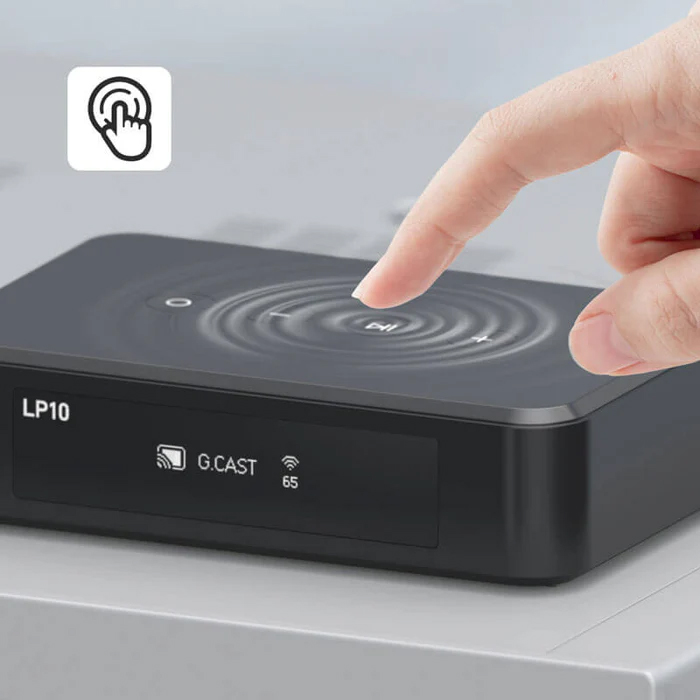
With the LP10 visible in Google Home, the real fun begins. Google Cast multi-room audio is incredibly stable when set up right, and the LP10 holds its own here surprisingly well.
You Must Also Like: Where to Buy Discontinued Chromecast Audio USA Near Me?
Creating the Group
-
Open Google Home.
-
Tap the "+" button and select "Create speaker group."
-
Select your Arylic LP10 alongside any other Google Cast devices you own (like Nest Audios or other Chromecast-enabled speakers).
-
Name your group something easy like "Everywhere" or "Downstairs".
The "Party Mode" Test
I tested this by grouping the LP10 (connected to a vintage amp and floor-standing speakers) with a Google Nest Hub in the kitchen. I fired up YouTube Music and tapped the Cast button.
The result? Perfect sync. There was no noticeable delay between the rooms. The LP10 handled the stream flawlessly, playing at 96kHz/24bit resolution over Google Cast, which is more than enough for critical listening on decent gear.
Sound Quality: The Transport vs. The DAC
One of the biggest questions I had was about the audio quality. Is the LP10 a weak link?
-
Using the Analog Out: The internal DAC (Digital to Analog Converter) inside the LP10 is decent. It’s neutral and clean, but it won't blow you away . For background music or casual listening, it’s perfectly fine. The volume level is strong, and the bass/treble controls in the app actually work without distorting the signal.
-
Using the Optical Out (The Real Secret): This is where the LP10 becomes a giant killer. The Toslink optical output can stream up to 24bit/192kHz . If you have a stereo with a built-in DAC, or if you connect this to an external DAC, the LP10 acts purely as a "transport."
When I hooked the LP10’s optical out to my external DAC, the soundstage opened up significantly. It sounded just as detailed as setups costing three times as much. If you buy this device, spend the $10 on a good optical cable—it transforms the experience.
The Elephant in the Room: LP10 vs. WiiM Pro
You can’t talk about the Arylic LP10 without addressing the competition. The Arylic LP10 vs WiiM Pro debate is common in forums, and here is the real talk based on using both.
-
Price: The LP10 usually wins here, often coming in significantly cheaper.
-
App Experience: WiiM’s app is currently more polished. The Go Control app works, but it feels a bit basic. It lacks deep EQ customization compared to the WiiM Home app, and the internet radio integration is clunky.
-
Platform: A key technical detail: most Arylic and WiiM devices use a common Linkplay module. However, the LP10 is unique—it does not use the standard Linkplay module. This means if you are trying to build a system using the WiiM app’s "Link" feature to group with other brands, the LP10 might not play nicely. It sticks strictly to Google Cast and AirPlay standards.
-
The Winner? For pure, standards-based Google Cast audio, the LP10 offers better value. If you need advanced features in the app (like parametric EQ or complex network streaming), the WiiM Pro is the safer bet.
Bluetooth Codecs and Digital Audio Quality
Since many people search for Arylic LP10 Bluetooth codec specs, let's clarify what you are getting. The LP10 uses Bluetooth 5.2. While the product page doesn't always explicitly list codecs like aptX or LDAC, the implementation is stable.
It supports standard high-quality Bluetooth streaming. However, the magic is in the bits per sample. When using Wi-Fi or Ethernet, the LP10 supports high-resolution audio.
This means if you are playing a FLAC file from your phone or a NAS drive, you are getting the full detail, provided you use the optical out.
If you rely on the analog out, the best Bluetooth audio bits per sample you experience will be limited by the LP10’s internal DAC, which, while good, isn't the pinnacle of high-end audio—that’s why the optical out is such a critical feature.
Real-World Limitations (What the Ads Don't Tell You)
To give you a trustworthy review, I have to highlight the flaws I found.
1. Spotify Connect Isn't "Native"
This confused me at first. You can play Spotify to the LP10, but it appears as a Google Cast device, not a native Spotify Connect device. This means you lose features like gapless playback.
For albums like Dark Side of the Moon or Abbey Road, that gap between tracks is jarring. If you try to disable Google Cast to force native Spotify Connect, the device might disappear entirely.
2. The App Needs Work
The Go Control app is functional, but it’s the weakest link. Setting up the NAS (Network Attached Storage) playback is not intuitive, and the radio station database is filled with dead links. You also can't dim the bright little OLED screen, which can be distracting in a dark room.
3. The Plastic Build
It feels light—almost too light. If you have heavy cabling, you might need to use a bit of double-sided tape to keep it in place so the cables don't yank it off the shelf.
Practical Advice for a Smart Purchase
If you are looking for an Arylic LP10 Google Cast setup guide because you are ready to buy, here is my practical, hands-on advice:
-
Check Your Gear: Do you have a decent DAC or a receiver with optical in? If yes, buy the LP10 immediately. It’s the cheapest way to get high-res streaming.
-
Wi-Fi Environment: If you have a complicated network with multiple access points, be prepared to use the Ethernet port for setup. Once it's on the network, it's rock solid, but the initial Wi-Fi handshake can be testy.
-
Read the Arylic LP10 manual: Specifically, look at the section about the web interface. Knowing that
http://(device IP)exists will save you hours of frustration if the app fails to find your Wi-Fi. -
Who is this NOT for? If you are deeply embedded in the Spotify ecosystem and can't live without gapless playback, the LP10 will annoy you. Stick to a native Spotify Connect device.
Final Verdict
The Arylic LP10 is a paradox. It feels a bit cheap in the hand but sounds expensive through the right connection. The Arylic LP10 Google Cast setup process can be annoying for the first 10 minutes, but once it’s running, it’s as stable as devices twice the price.
It is the perfect tool to breathe life into an old stereo. It is not perfect—the app and the Spotify implementation need work—but for the pure joy of hearing your vintage setup sync perfectly with a modern speaker in another room, it delivers. It makes music flow through your home like air, even if the box itself feels like it might float away.